Runner's Knee
Can Physical Therapy Fix Runner's Knee? What to Expect in Green Bay
Yes — physical therapy works for runner's knee. In most cases it's the most effective treatment available, and it's the one most runners skip in favor of rest, ice, and hoping it goes away on its own. It rarely does.
What Is Runner's Knee?
"Runner's knee" is a catch-all term for pain around or behind the kneecap (patella) that gets worse with running, squatting, going up and down stairs, or sitting for long periods. The clinical term is patellofemoral pain syndrome. It's not caused by a single injury — it's usually the result of a tracking problem, a weakness upstream (hips, glutes), or a mechanics issue that's been loading the knee incorrectly for months.
That's why rest alone doesn't fix it. You rest, the inflammation calms down, you go back to running, and it comes right back. Nothing changed mechanically.
Why Physical Therapy Works
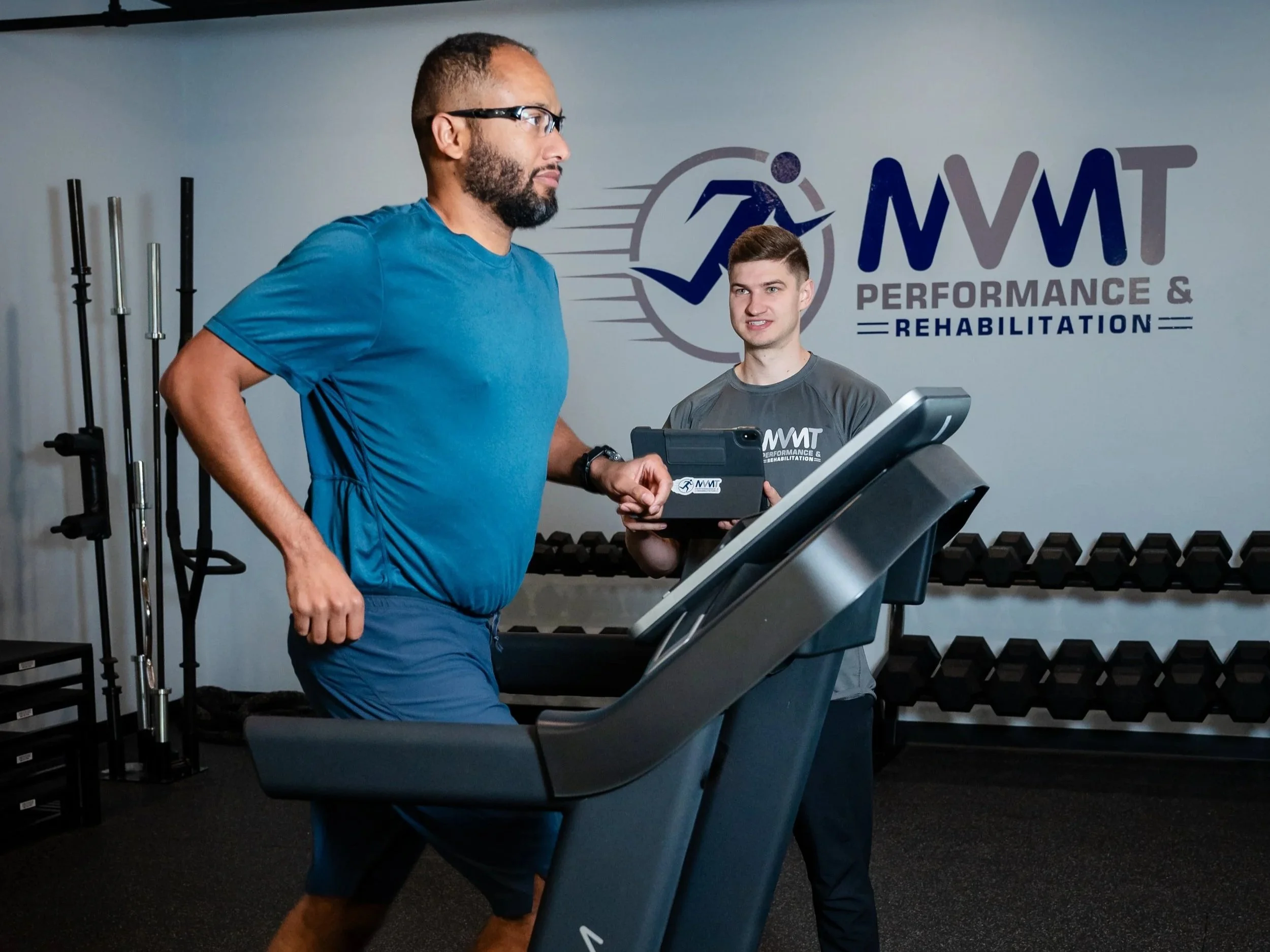
A good PT doesn't just treat your knee. They look at why the knee is being stressed in the first place. At MVMT Performance & Rehabilitation in Green Bay, your evaluation includes a full movement analysis — we watch how you run, squat, and load the joint — and we find the upstream cause.
For most runners with knee pain, the fix involves a combination of:
Hip and glute strengthening — weak hips cause the knee to collapse inward under load
Quad and VMO activation — the inner quad muscle is often underperforming relative to the outer
Running mechanics work — small adjustments to cadence, foot strike, or trunk position can dramatically reduce knee stress
Manual therapy and dry needling — to address tight tissue and trigger points that are pulling the kneecap off track
Gradual return-to-run protocol — so you build back miles without re-aggravating the joint
What to Expect at Your First Visit in Green Bay
Your first session at MVMT is a full 60-minute evaluation — no rushing, no 10-minute appointments with an aide. Your clinician will:
Review your running history, training load, and when/how the pain started
Watch you move — squats, single-leg work, and if possible, your running gait
Assess hip strength, mobility, and how your knee tracks under load
Identify the root cause — not just where it hurts, but why
Walk you out with a clear plan: how many sessions, what we're targeting, and what success looks like
In most cases, you'll also start treatment at that first visit — not just assessment. You won't leave without having done something that helps.
Do You Have to Stop Running?
Usually not. In most cases we keep you running at a modified volume or intensity while we work on the underlying problem. Complete rest is rarely the right answer — it weakens the tissues we're trying to strengthen, and it doesn't fix what caused the pain. We'll give you a realistic plan for how to manage your training load while you heal.
How Long Does It Take?
Most runners with patellofemoral pain see significant improvement in 4–8 sessions. More complex cases — longer-standing pain, compensatory patterns that have built up over years — may take longer. We'll give you a realistic timeline at your first visit based on what we find.
Ready to Stop Running Through It?
If you've been managing knee pain for more than a few weeks, it's time to get it looked at. MVMT Performance & Rehabilitation is Green Bay's cash-based, 1-on-1 physical therapy clinic. No insurance required, no referral needed, and your first eval is just $99.
Book your free 15-minute phone consultation at mvmtgb.com/runners-physical-therapy-in-green-bay-wi or call (920) 309-6588.