Dry Needling vs. Acupuncture: What's the Difference?
Dry needling and acupuncture both use thin needles inserted into the body — but that's about where the similarity ends. Dry needling is a Western, evidence-based technique used by physical therapists to release muscle trigger points and restore normal movement. Acupuncture is rooted in traditional Chinese medicine and focuses on energy flow through the body's meridians. If you're trying to decide which one you need, the answer comes down to what's causing your problem.
What Is Dry Needling?
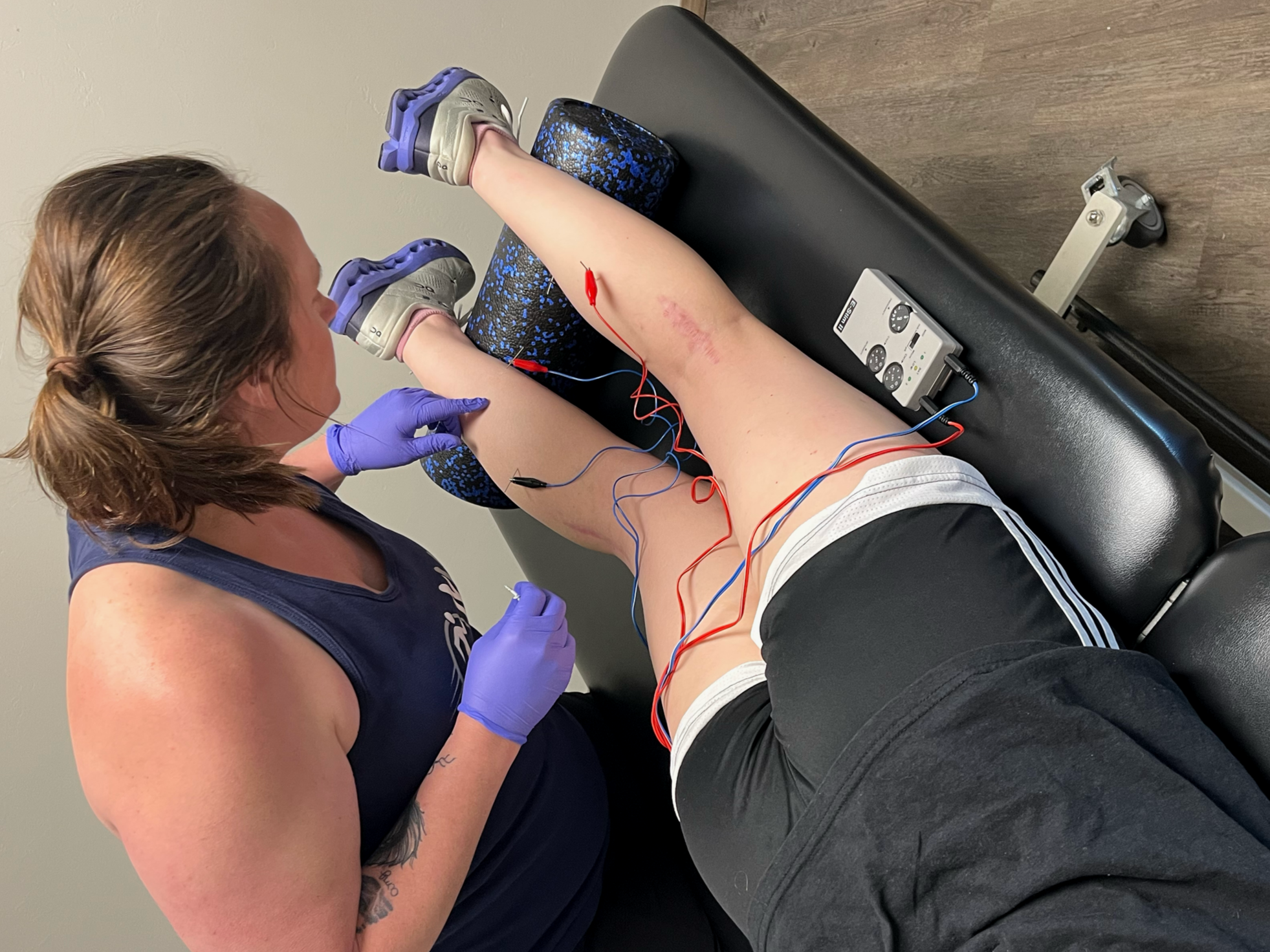
Dry needling targets specific points in muscle tissue — called myofascial trigger points — that are causing pain, restricting movement, or contributing to injury. When a physical therapist inserts a needle into a trigger point, the muscle responds with a brief twitch, which releases the tension and restores normal blood flow to the area. The result is reduced pain, improved range of motion, and better muscle function.
It's called "dry" because there's no medication or injection involved — just a needle. The technique is used alongside manual therapy, exercise, and movement work, not as a standalone treatment.
What Is Acupuncture?
Acupuncture is a practice from traditional Chinese medicine that uses needles to stimulate specific points along energy pathways (called meridians) throughout the body. The theory is that pain and illness occur when the flow of energy (qi) through these pathways is disrupted. Stimulating acupuncture points is believed to restore balance and promote healing.
Acupuncture is practiced by licensed acupuncturists who complete a 3–4 year master's program in traditional Chinese medicine. It's used for a wide range of conditions, from pain and stress to digestive issues and sleep problems.
What's the Key Difference?
The simplest way to put it: dry needling targets specific muscle dysfunction with a Western, anatomical approach. Acupuncture targets energy flow with a traditional Chinese medicine approach. One is a tool in a physical therapist's toolbox for treating injury and movement problems. The other is a standalone practice rooted in a different medical tradition.
At MVMT in Green Bay, dry needling is used alongside manual therapy and strength-based rehab — not instead of it. It's one part of a comprehensive treatment plan, not the plan itself.
Which One Do You Need?
If you have a specific injury, chronic muscle tension, or a movement problem tied to tight or dysfunctional muscle tissue, dry needling is likely more targeted to your issue. If you're looking for broader wellness support, stress reduction, or care for a condition outside of musculoskeletal injury, acupuncture may be the right fit.
When in doubt: if your problem has a specific location, movement limitation, or connection to athletic activity, start with a physical therapist who performs dry needling.
Does Dry Needling Hurt?
Most patients feel a brief twitch sensation when the needle hits a trigger point — some describe it as a quick cramp or deep pressure. It's not painless, but it's fast and the relief that follows is typically significant. Any soreness after a session usually resolves within 24–48 hours, similar to a hard workout.
Interested in dry needling in Green Bay? Book a free consultation at MVMT — we'll assess whether it's the right tool for your situation.