
ACL Rehabilitation in Green Bay, WI
Get Back to Moving Better and Feeling Stronger
ACL Rehabilitation in Green Bay, WI
An ACL injury doesn't have to end your season — or your career. At MVMT in Green Bay, ACL rehabilitation is built around getting you back to full performance, not just clearing you to walk. We work with athletes and active adults before and after surgery with a progressive, strength-based protocol and a clear return-to-sport timeline.
What separates ACL rehab at MVMT from what you'll find at most PT clinics is the standard we hold. We don't discharge you because twelve weeks passed. We discharge you when you've hit the strength benchmarks and movement criteria that actually predict safe return to sport.
Pre-Op Rehab — Why Starting Before Surgery Matters
If you're scheduled for ACL reconstruction, starting PT now is one of the highest-leverage things you can do. Research consistently shows that patients who enter surgery with better quad strength and full range of motion have significantly better outcomes — faster recovery, better strength return, and lower re-injury risk.
We'll assess where you are, build a prehab program to maximize your strength before surgery, and give you a clear picture of what the post-op road looks like.
Post-Op Rehab — Phase by Phase
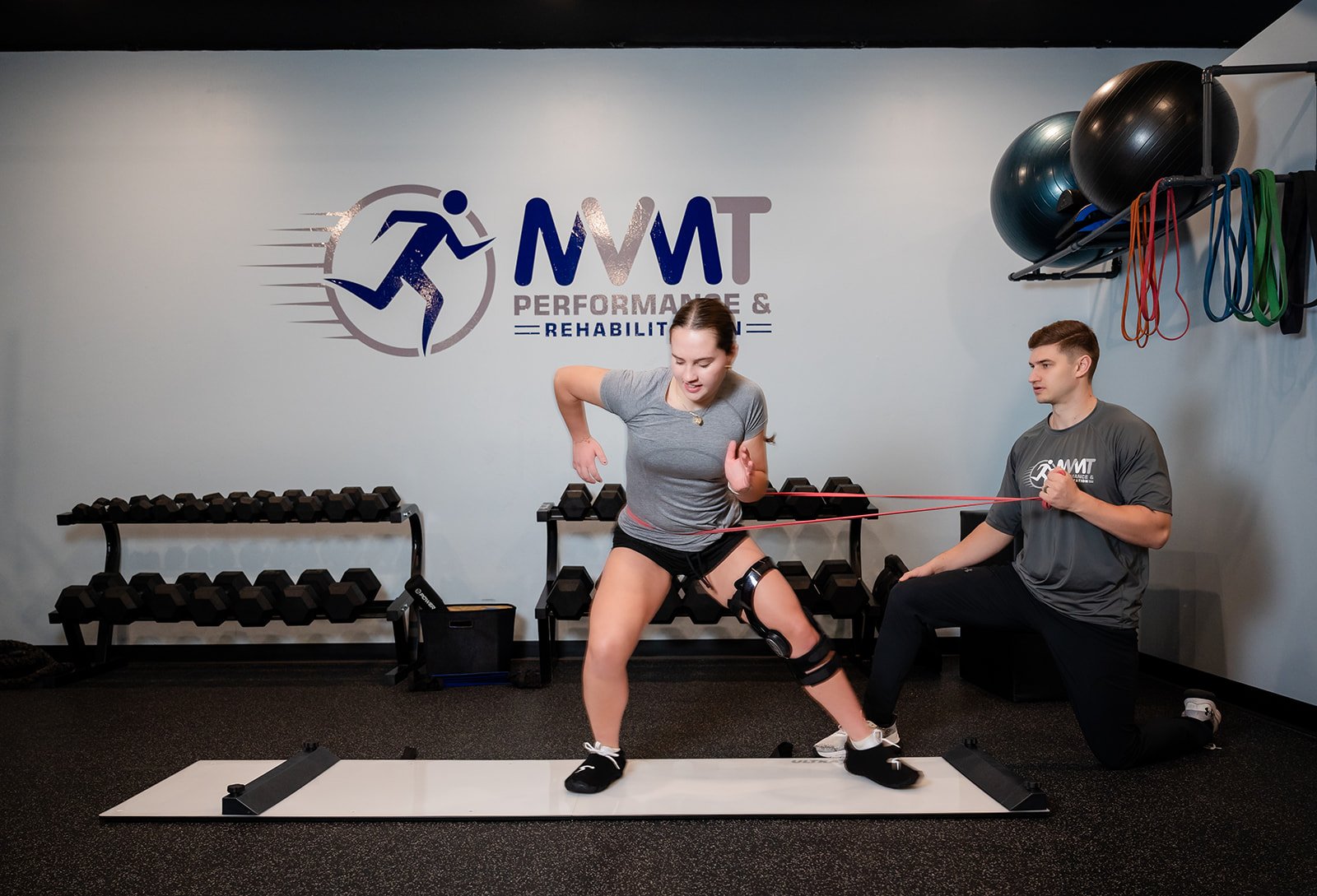
ACL rehab at MVMT is criteria-based, not calendar-based. You progress when the tissue and strength measures say you're ready — not when the protocol says to move on. Here's how it typically unfolds:
Phase 1 — Weeks 0–6: Foundation Control swelling, restore full extension, activate the quad, and get back to normal gait. We're rebuilding the neuromuscular connection that the surgery disrupted.
Phase 2 — Weeks 6–12: Strength Progressive loading through squats, lunges, leg press, and posterior chain work. Single-leg strength becomes the primary driver. We measure it — we don't guess.
Phase 3 — Months 3–6: Power and Movement Return to running (criteria-based), plyometric progression, lateral movement, change of direction. Everything is measured and progressed systematically.
Phase 4 — Months 6–12: Return to Sport Sport-specific movement, competitive drills, strength symmetry testing, and psychological readiness. You don't return to sport until the numbers say you're ready — not because the calendar says twelve months.
What Makes MVMT Different
for ACL Rehab
Standard PT clinics are limited by insurance - typically 2–3 visits per week for 6–8 weeks, then you're on your own. ACL rehab takes 9–12 months. The gap between what insurance covers and what a full ACL recovery requires is enormous.
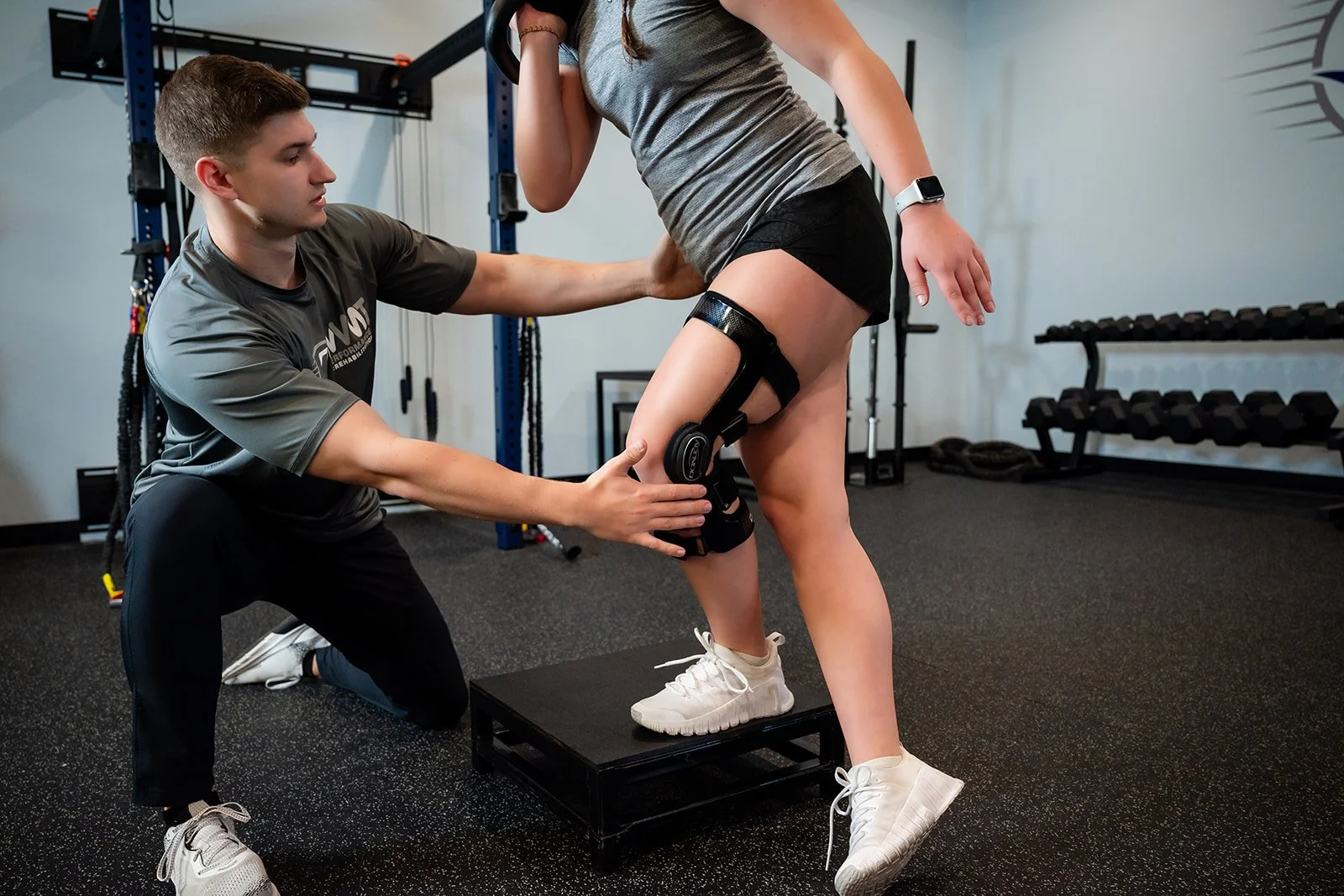
At MVMT, you get a full hour every session. No techs. No shared time. Your clinician knows exactly where you are in the protocol, tracks your strength data, and progressively loads you at the right rate. Between-session programming keeps you progressing even when you're not in the clinic.
Real Results From Patients Like You
We've helped hundreds of active adults and athletes in the Green Bay and De Pere area get back to doing what they love — whether that's running, lifting, playing with their kids, or just moving through the day without pain. Our Google reviews speak for themselves: 170+ five-star reviews and counting.
Reviews
Frequently Asked Questions
Do I need surgery for an ACL tear?
Not always. Partial tears and complete ACL tears in less active individuals can sometimes be managed conservatively with PT. We'll give you an honest clinical assessment and help you make an informed decision alongside your orthopedic surgeon.
How long does ACL recovery take?
Most surgical ACL reconstructions require 9–12 months for safe return to sport. Some athletes return sooner; some take longer. We'll give you a realistic timeline at your eval and update it as you progress.
Can I start PT before my surgery date
Yes — and you should. Prehab before ACL surgery improves post-surgical outcomes measurably. Even 2–4 weeks of targeted pre-op work makes a difference.
Do you work with youth athletes?
Yes. We have experience working with high school and college athletes through ACL rehab and return to sport.
I'm scared I'll re-tear it. How do you handle the psychological side?
It's real, and we take it seriously. Return-to-sport readiness isn't just physical. We use objective strength testing, progressive sport-specific loading, and honest conversations about where you are mentally. We don't rush you back.